The landscape of search is undergoing its most dramatic transformation in decades. With ChatGPT answering over 1 billion queries per week and Google’s AI Overviews appearing in roughly 15% of searches, traditional SEO metrics no longer tell the complete story of your clients’ online visibility. For agencies managing multiple client portfolios, the question isn’t whether to track AI search visibility—it’s how to do it effectively and at scale.
Answer Engine Optimization (AEO) and Generative Engine Optimization (GEO) have emerged as critical disciplines for ensuring brands remain visible when users ask AI engines for recommendations, comparisons, and information. But tracking performance across ChatGPT, Claude, Google AI, Perplexity, and other platforms presents unique challenges that traditional SEO tools weren’t designed to address.
This comprehensive guide examines the best AEO reporting tools for agencies 2026, comparing features, pricing, and capabilities to help you choose the right AI search visibility reporting tools for SEO agencies.
Understanding AEO and GEO: What Agencies Need to Track
Before diving into specific tools, it’s essential to understand what effective AEO GEO reporting platforms white-label agency solutions should measure.
Key Metrics for AI Search Visibility
Mention Rate: How frequently does a brand appear when relevant queries are asked across different AI platforms? This is the foundational metric—similar to traditional search rankings, but measured through conversational queries.
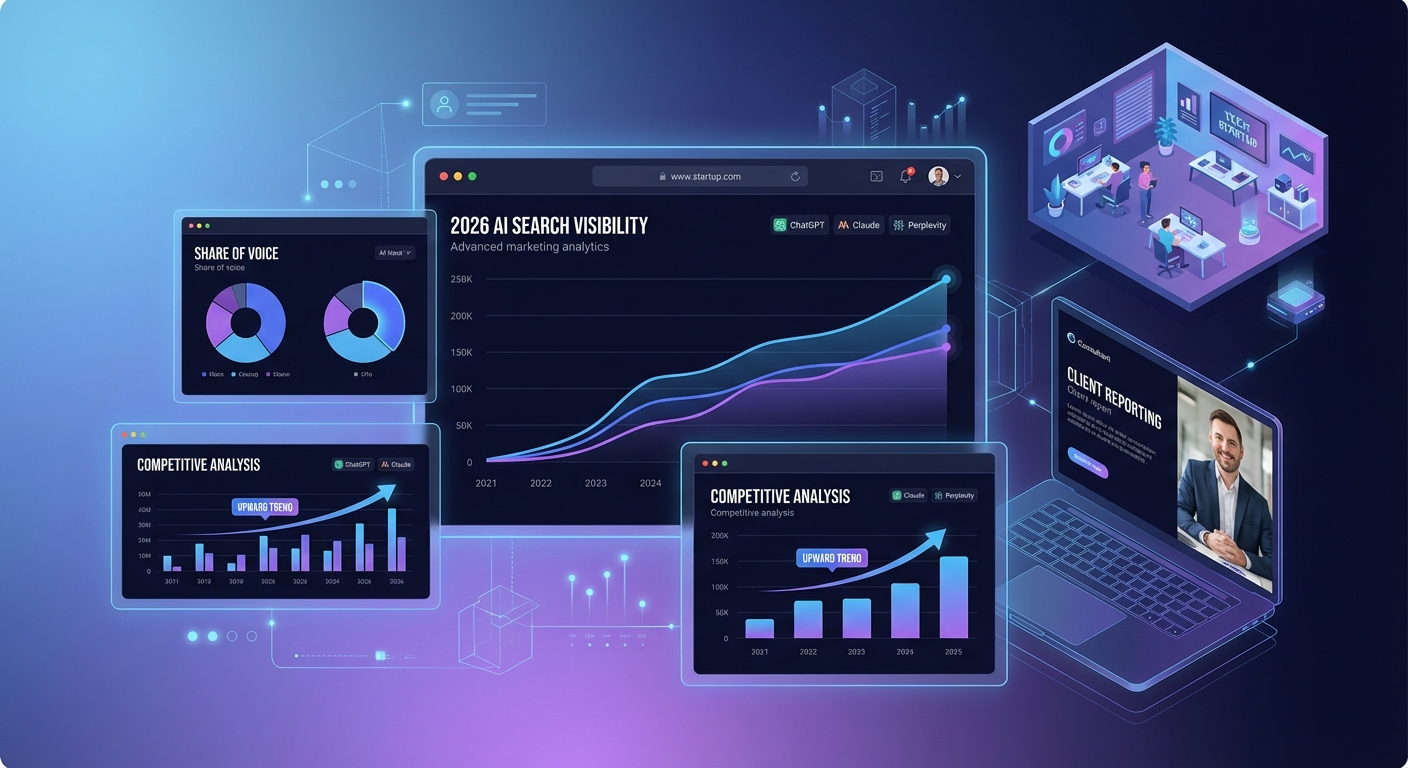
Share of Voice: Among competitors mentioned in AI responses, what percentage of visibility does each brand capture? This competitive metric helps agencies benchmark client performance.
Persona-Based Performance: Different customer profiles ask questions differently. Effective tracking requires simulating queries from various buyer personas, industries, and use cases.
Platform-Specific Visibility: Performance varies significantly across AI engines. A brand might rank well in ChatGPT but poorly in Claude or Perplexity, requiring platform-specific optimization strategies.
Response Quality and Context: It’s not just about being mentioned—it’s about how the brand is positioned, what attributes are highlighted, and whether the context is favorable.
RivalSee has emerged as one of the most focused solutions specifically built for tracking AI search visibility across multiple platforms. Unlike traditional SEO tools that have added AI features as an afterthought, RivalSee was designed from the ground up for Answer Engine Optimization tracking.
Core Capabilities:
The platform monitors brand mentions across ChatGPT, Claude, Google AI, Perplexity, and other major AI engines using persona-driven conversations that simulate real customer queries. This approach provides more accurate visibility data than simple keyword tracking because it captures how brands are actually recommended in conversational contexts.
RivalSee’s competitive tracking feature allows agencies to monitor not just client visibility but also how competitors are performing across different AI platforms. The system tracks mention rates, analyzes response contexts, and provides actionable recommendations for improving visibility through content optimization and strategic positioning.
Agency Benefits:
For agencies managing multiple clients, RivalSee offers several advantages. The platform provides clear, visual reports that translate complex AI visibility data into client-friendly metrics. The competitor benchmarking feature makes it easy to demonstrate value by showing how optimization efforts improve a client’s share of AI-generated recommendations.
The tool’s persona-driven approach is particularly valuable for agencies serving diverse industries, as different buyer types search differently and receive different recommendations from AI engines.
Pricing and Scalability:
RivalSee offers tiered pricing based on the number of brands tracked and query volume, making it accessible for boutique agencies while scaling for larger operations managing extensive client rosters.
2. BrightEdge: Enterprise SGE Tracking for Agencies
BrightEdge has expanded its comprehensive SEO platform to include SGE (Search Generative Experience) tracking capabilities, positioning itself as an enterprise solution for large agencies.
BrightEdge SGE Tracking for Agencies Features:
BrightEdge’s DataCube technology now captures AI Overview appearances in Google Search, tracking which queries trigger AI-generated responses and whether client content is referenced. The platform provides visibility into how Google’s AI summarizes information and which sources receive attribution.
The tool integrates AI visibility data with traditional SEO metrics, allowing agencies to see the complete picture of organic visibility across conventional search results and AI-generated content. This unified approach helps agencies identify content gaps and optimization opportunities.
Limitations:
BrightEdge primarily focuses on Google’s AI features rather than providing comprehensive coverage across ChatGPT, Claude, and other independent AI platforms. This Google-centric approach may leave visibility gaps for agencies whose clients need broader AI search coverage.
Additionally, BrightEdge positions itself as an enterprise solution with corresponding price points, potentially putting it out of reach for smaller agencies or those just beginning to offer AEO services.
3. Rank Ranger: AI Overview Tracking Integration
Rank Ranger has integrated AI Overview tracking into its existing rank tracking and reporting platform, making it a convenient option for agencies already using the tool.
Rank Ranger AI Overview Tracking Capabilities:
The platform monitors when Google AI Overviews appear for tracked keywords and identifies whether client websites are cited as sources within those AI-generated answers. This source attribution tracking is valuable for understanding which content types and structures Google’s AI favors.
Rank Ranger’s strength lies in its integration with existing SEO workflows. Agencies can view AI Overview data alongside traditional rankings, local pack appearances, and featured snippets within unified client reports.
Scope Considerations:
Like BrightEdge, Rank Ranger’s AI tracking focuses primarily on Google’s ecosystem. For agencies needing comprehensive visibility across ChatGPT, Claude, Perplexity, and other AI platforms, additional tools would be required to complete the picture.
The tool excels at monitoring Google AI Overviews but doesn’t provide the persona-driven conversation testing or competitive benchmarking across multiple AI engines that specialized AEO platforms offer.
4. Authoritas: Generative Search Tracker
Authoritas has developed its Generative Search tracker to help agencies monitor AI-powered search visibility with a focus on enterprise clients.
Authoritas Generative Search Tracker Features:
The platform tracks AI-generated search results across Google’s Search Generative Experience, providing insights into which topics trigger AI responses and how client content performs within those results.
Authoritas emphasizes its technical SEO foundation, connecting AI visibility to underlying site health factors like schema markup, content structure, and entity recognition—factors that influence how AI engines understand and recommend brands.
Agency Workflow Integration:
For agencies managing technical SEO alongside AEO efforts, Authoritas provides a connected view of how site optimization impacts both traditional rankings and AI visibility. The platform’s technical audits can identify issues that may prevent proper AI understanding of client content.
The tool is particularly well-suited for agencies with enterprise clients who require comprehensive technical documentation and detailed reporting on multiple visibility channels.
5. Search Atlas with OTTO: AI-Powered SEO Intelligence
Search Atlas has introduced OTTO, an AI assistant designed to provide Search Atlas OTTO SEO AI visibility reporting alongside traditional optimization recommendations.
OTTO’s AI Visibility Features:
OTTO analyzes content performance across traditional search and emerging AI platforms, providing recommendations for optimizing content to improve visibility in both contexts. The tool uses natural language processing to evaluate how well content answers specific queries.
The platform’s strength is its prescriptive approach—rather than just reporting on current visibility, OTTO suggests specific content improvements, structural changes, and optimization strategies to enhance AI search performance.
Best Use Cases:
Search Atlas works well for agencies that want an integrated platform combining traditional SEO with emerging AEO strategies. The tool is particularly useful for content-focused optimization, helping agencies identify which topics and formats generate the strongest AI visibility.
However, Search Atlas with OTTO provides more general AI optimization guidance rather than granular, platform-specific tracking of mentions across ChatGPT, Claude, Perplexity, and other individual AI engines.
6. WordLift: Structured Data for AEO
WordLift approaches AI optimization from a different angle, focusing on structured data and knowledge graph optimization to improve how AI engines understand and reference content.
WordLift AEO Reporting Features:
The platform helps agencies implement schema markup, build knowledge graphs, and create entity-rich content that AI systems can more easily interpret and cite. WordLift’s reporting shows how structured data implementation impacts visibility across various platforms.
For AEO specifically, WordLift emphasizes the foundational elements that make content “AI-readable”—proper entity recognition, clear semantic relationships, and structured information that language models can confidently reference.
Technical Foundation Approach:
WordLift is best viewed as a complementary tool rather than a comprehensive AEO tracking platform. While it provides valuable insights into content structure and entity optimization, agencies will typically need additional tools for competitive tracking and persona-driven visibility measurement.
The platform excels at helping agencies build the technical foundation for AEO success but requires supplementation with tools like RivalSee for ongoing visibility monitoring and competitive analysis.
Profound offers AI search analytics with a focus on understanding how brands appear across generative AI platforms and what drives those appearances.
Key Capabilities:
Profound tracks brand mentions and sentiment across AI-generated responses, providing insights into how brands are characterized when AI engines answer user queries. The platform analyzes the context of mentions, helping agencies understand whether client brands are positioned favorably.
The tool includes competitive analysis features, showing share of voice across AI platforms and identifying which content themes and formats generate the strongest visibility for competitors.
Agency Considerations:
Profound positions itself as an analytics and insights platform, helping agencies understand the “why” behind AI visibility patterns. This strategic approach complements more tactical tracking tools, providing the context agencies need to develop effective optimization strategies.
8. Otterly: AI Search Presence Monitoring
Otterly specializes in monitoring brand presence across AI search and chatbot platforms, with particular emphasis on conversational AI interfaces.
Platform Coverage:
Otterly tracks how brands appear in ChatGPT, Claude, Perplexity, Google’s Bard/Gemini, and other AI systems. The platform uses query testing to simulate how different questions and prompts generate brand recommendations across these platforms.
The tool provides visibility reports showing mention frequency, competitive benchmarking, and context analysis for how brands are discussed by AI engines.
Reporting Features:
For agencies, Otterly offers client-facing reports that visualize AI visibility trends over time, competitive positioning, and platform-specific performance. The reports can be customized to highlight metrics most relevant to specific industries or client objectives.
9. Peec.ai: Conversational AI Optimization
Peec.ai focuses on optimizing content for conversational AI platforms, providing both tracking and optimization recommendations for improving brand visibility in AI-generated responses.
Unique Approach:
Peec.ai emphasizes the conversational nature of AI interactions, testing how brands perform across different query formulations and conversation contexts. The platform identifies which content themes and formats generate consistent AI mentions.
The tool provides content optimization recommendations specifically designed to improve visibility in AI-generated answers, helping agencies move beyond traditional SEO tactics to strategies that work in conversational contexts.
Best For:
Agencies focused on content strategy and conversational marketing will find Peec.ai’s approach particularly valuable. The platform bridges the gap between traditional content optimization and the emerging requirements of AI visibility.
When evaluating top AEO tools AI visibility tracking client reports, agencies should assess platforms against several critical criteria:
The best tools track visibility across multiple AI engines rather than focusing solely on Google’s ecosystem. ChatGPT, Claude, Perplexity, and other platforms each have substantial user bases and distinct recommendation algorithms.
Why it matters: A client might have strong Google AI visibility but be completely absent from ChatGPT recommendations, representing a significant missed opportunity. Comprehensive platforms like RivalSee provide the multi-engine coverage agencies need to identify and address these gaps.
Persona-Driven Testing
Effective AEO reporting requires testing how different customer profiles receive different recommendations. The queries a technical buyer asks differ dramatically from those a general consumer poses.
Implementation: Look for tools that allow agencies to create custom personas and test visibility across relevant query patterns for each client’s target audiences.
Competitive Benchmarking
Visibility metrics mean little without competitive context. The best AI search visibility reporting tools for SEO agencies include robust competitor tracking that shows relative performance and identifies optimization opportunities.
Actionable Recommendations
Reporting alone isn’t enough—agencies need guidance on how to improve client visibility. Platforms should connect visibility data to specific optimization actions, whether that’s content gaps, technical implementations, or strategic positioning changes.
White-Label Capabilities
For AEO GEO reporting platforms white-label agency requirements, the ability to present reports under your agency brand enhances client relationships and reinforces your value proposition.
Integration with Existing Workflows
The best tools integrate with agencies’ existing tech stacks rather than requiring completely separate workflows. Look for platforms that connect with reporting tools, CRM systems, and project management platforms.
Building an AEO/GEO Tech Stack for Your Agency
Most agencies find that a combination of tools provides the most comprehensive AI search visibility coverage:
Recommended Combination Approach
Foundation Layer: Start with a specialized AI visibility platform like RivalSee that provides core tracking across multiple AI engines with persona-driven testing and competitive analysis.
Technical Layer: Add a structured data and technical optimization tool like WordLift to ensure proper entity recognition and schema implementation.
Enterprise Layer: For larger clients, consider adding BrightEdge or Authoritas to access enterprise features and deeper technical integration.
Analytics Layer: Supplement with tools like Profound or Peec.ai for strategic insights into content performance and optimization opportunities.
Budget Considerations
Agencies can start with a single specialized tool for core tracking and expand their stack as client needs and budgets grow. Entry-level AEO tracking can begin around $200-500/month with platforms like RivalSee, while comprehensive enterprise solutions may run $2,000-10,000+ monthly.
Implementation Best Practices for Agency AEO Reporting
Setting Client Expectations
Educate clients that AI visibility is a new frontier with different dynamics than traditional SEO. Rankings can fluctuate based on conversation context, and optimization often requires different content strategies than conventional search optimization.
Establishing Baselines
Begin each engagement with comprehensive baseline measurements across all relevant AI platforms. This initial assessment identifies existing visibility, competitive positioning, and priority optimization opportunities.
Regular Monitoring Cadence
Unlike traditional SEO where weekly or monthly reporting may suffice, AI visibility benefits from more frequent monitoring as AI engine algorithms and training data evolve rapidly.
Connecting AEO to Business Outcomes
Whenever possible, connect AI visibility improvements to actual business metrics—lead generation, brand consideration, or customer acquisition. This connection reinforces the value of AEO investments for clients.
Future-Proofing Your Agency’s AEO Capabilities
The AI search landscape will continue evolving rapidly. Agencies should select tools that demonstrate ongoing platform expansion and feature development rather than one-time implementations.
Beyond current major players, monitor emerging AI search platforms and ensure your tracking tools can adapt to include new engines as they gain market share.
Voice and Multimodal Search
As AI search expands beyond text to include voice queries and image-based searches, look for tools positioning to track these emerging formats.
Local AEO
For agencies serving local businesses, specialized tracking of local AI recommendations will become increasingly important as AI engines provide location-based recommendations.
The best AEO/GEO reporting tools for agencies balance comprehensive tracking, actionable insights, and practical implementation within agency workflows. While multiple strong options exist, the right choice depends on your specific client mix, budget constraints, and service offerings.
For agencies seeking specialized, multi-platform AI visibility tracking with competitive analysis, RivalSee provides purpose-built functionality at accessible price points. Larger agencies with enterprise clients may layer in BrightEdge or Authoritas for additional technical depth and integration capabilities.
The common thread among successful agency AEO implementations is starting now rather than waiting for the market to mature further. AI search adoption is accelerating, and brands that establish visibility early will benefit from compounding advantages as these platforms continue gaining user share.
Key Takeaways:
- Track visibility across multiple AI platforms, not just Google’s ecosystem
- Use persona-driven testing to understand how different audiences receive brand recommendations
- Include competitive benchmarking to provide meaningful context for client performance
- Connect AI visibility metrics to actual business outcomes whenever possible
- Start with a focused tool and expand your stack as client needs grow
The agencies that master AEO reporting and optimization today will differentiate themselves as this channel matures into a primary source of customer discovery and brand evaluation. The question isn’t whether to invest in AI optimization reporting tools AI search visibility ‘AI optimization’ ‘AEO’ tools agencies—it’s which combination of platforms will best serve your clients’ evolving needs in this transformative search landscape.